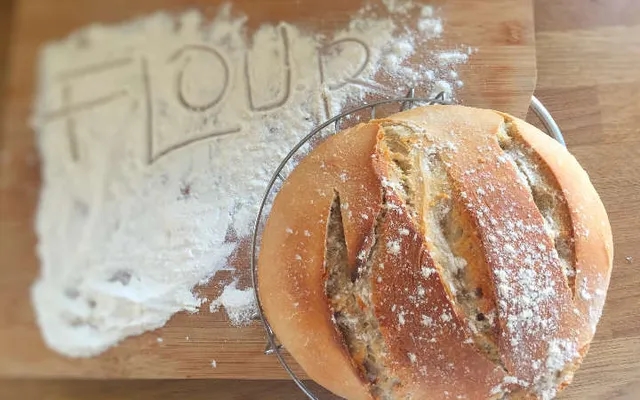



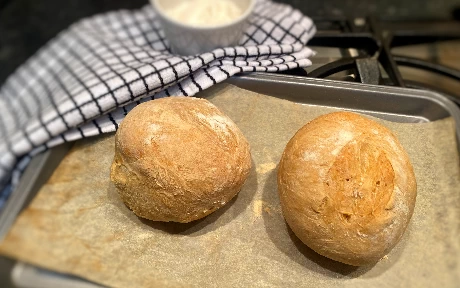


In 1928 baking bread started to decline thanks to the introduction of the Bread slicing machine. Today homemade bread is making a come back. People are returning to homemade artisan baking, such as these tasty bread rolls.
This recipe follows the same process as making a loaf of bread, the only difference here is that we are going to devide the dough into 70g balls. So you should get around 10 - 12 bread rolls out of this recipe.
...
The history of the bread roll is a fascinating journey that traces back to ancient civilizations, where bread was a staple food.
Initially, these small, round loaves were crafted by hand, often baked in communal ovens, and served as a convenient accompaniment to meals. As cultures evolved, so did the bread roll, with various regions adding their unique twists. For instance, in France, the baguette's influence led to the creation of the classic French roll, while in Germany, the pretzel roll emerged, showcasing the local preference for a chewy texture.
Over the centuries, bread rolls have adapted to reflect culinary trends and innovations, from the introduction of enriched doughs to the rise of artisan baking.
Today, they come in countless varieties, from soft and fluffy to crusty and hearty, making them a beloved choice in cuisines around the world, whether served alongside a hearty stew or as the base for a gourmet sandwich.
Our Shop

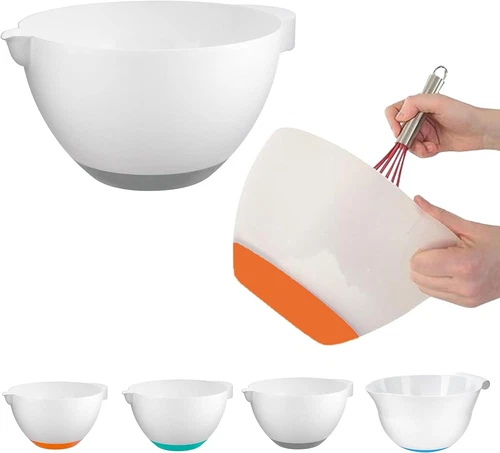
Mixing Bowl
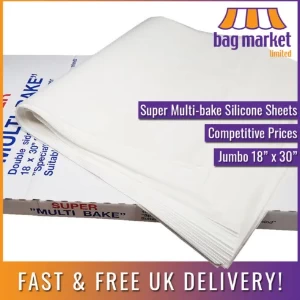
Silicon Paper
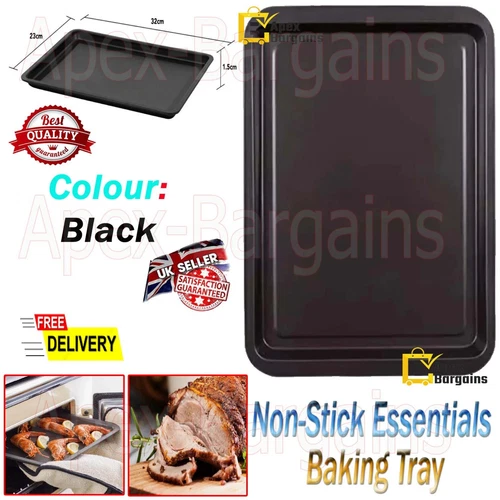
Baking Tray
Kitchen Scales

In 1928 baking bread started to decline thanks to the introduction of the Bread slicing machine. Today homemade bread is making a come back. People are returning to homemade artisan baking, such as these tasty bread rolls.
I made these bread rolls recently as part of a training course in work, the idea came about because I was demonstrating how to make a loaf of bread but using scaled down ingredients.
After baking my dough at home I decided this was a good size for a bread roll and so came about this recipe.
...
Bread rolls come in a variety of forms, each offering unique flavours and textures that cater to diverse culinary preferences.
From soft and fluffy dinner rolls to crusty artisan varieties, these baked goods can be made with different types of flour, such as wheat, rye, or gluten-free alternatives.
Additionally, they can be enhanced with various ingredients, including herbs, cheese, or seeds, allowing for endless customization.
The versatility of bread rolls makes them suitable for a wide range of occasions, from casual meals to formal gatherings, highlighting their importance in global cuisine.
 Cuisine:Various Cuisines