






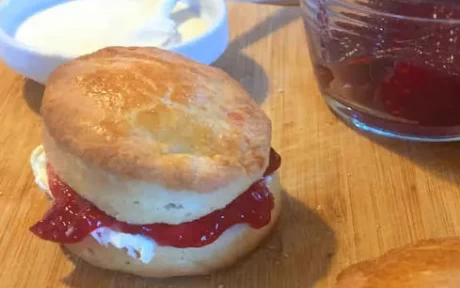
When you think of Scones you probably think of Cream Teas with Clotted Cream and Jam right ?
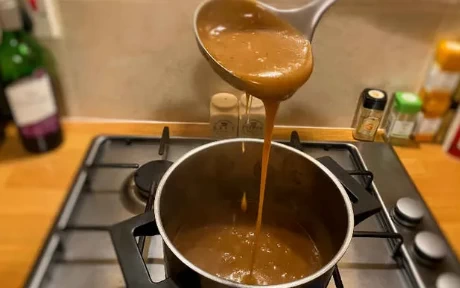
Scones are indeed delicious for an afternoon Tea, but did you know that Scones were also used for topping Lamb Cobbler until Suet Pastry was used instead.
Scones are very versatile, ideal for the Perfect cream Tea or as a savoury topping for a Cobbler.
I like to east a Scone with Clotted Cream and Jam, or is it Jam and Clotted Cream ? Which do you put on first ?
...
Originating in Scotland in the 16th century, scones were initially made with oats and baked on a griddle, resembling a type of flatbread.
The term "scone" is believed to derive from the "Scone" stone, where Scottish kings were once crowned, symbolizing a connection to national identity.
Over time, the recipe evolved, particularly during the 19th century, when the introduction of wheat flour and the practice of baking in an oven transformed the scone into the lighter, sweeter version we recognize today.
This period also saw the addition of ingredients such as currants, raisins, and other fruits, enhancing the flavor and texture.
The scone became a staple of the traditional British afternoon tea, popularized by figures such as Anna Maria Russell, the Duchess of Bedford, in the early 1840s.
Today, scones are enjoyed worldwide, often served with clotted cream and jam, and continue to be a popular treat that embodies the rich cultural heritage of the British Isles.
Our Shop

Scones are a type of baked good that originated in the United Kingdom, typically enjoyed during afternoon tea.
They are made from a simple mixture of flour, sugar, baking powder, butter, and milk or cream, resulting in a light and crumbly texture.
Scones can be served plain or with various additions such as fruits, nuts, or chocolate chips, and are often accompanied by clotted cream and jam.
 Cuisine: Scotish






Once you have made these Scones the only desicion you will have to make is Cream or Jam first.