





When it comes to cooking eggs you do have to be a bit careful about it. Eggs burn easily, become overcooked and can be dry and tasteless.
Scrambled Eggs should be light and fluffy with a creamy, moist texture which is why most Chef's will tell you never cook scrambled eggs in a microwave, it will just dry them out. That goes with any type of egg, microwaves just heat up and evaporate water and eggs are basically a liquid.
Scrambled Eggs are perfect on a breakfast and they don't take long to make and are easy to cook.
...
The history of scrambled eggs dates back to ancient times, with variations of the dish appearing in various cultures.
Early references can be found in Roman texts, where eggs were often cooked in a simple manner.
Over the centuries, the technique evolved, with different regions adding their unique twists, such as spices and herbs.
By the Middle Ages, scrambled eggs became a popular dish in Europe, often served at banquets and feasts.
In modern cuisine, scrambled eggs have gained widespread acclaim, celebrated for their versatility and ease of preparation, making them a staple breakfast item around the world.
Our Shop

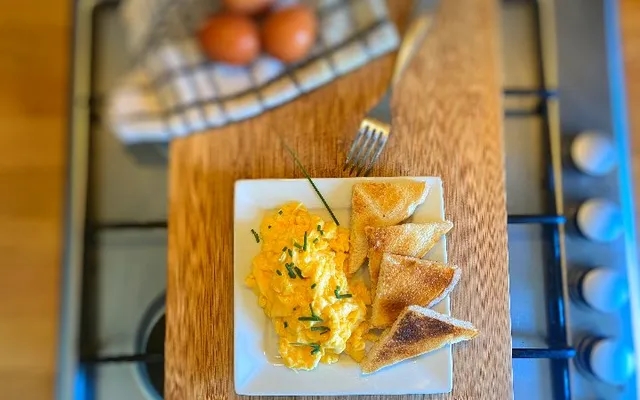
Scrambled eggs is a dish made from eggs stirred, whipped or beaten together while being gently heated, typically with salt, butter, oil and sometimes other ingredients
A lot of people get this simple breakfast wrong by over cooking the eggs or worse still, cooking them in a microwave. You should never make scrambled eggs in a microwave as this just evaporates all of the moister in the eggs and leaves them dry.
Scrambled eggs are a bit like Omelettes in that they are both made with eggs, cooked in a pan with butter or oil.
Scrambled eggs are the perfect addition to the iconic full English breakfast.
 Cuisine: European, French






Never make Scrambled Eggs in a microwave. A microwave only heats fluid so the eggs will just be dry.